Cultural and Physical Landscapes
The Jordan Canal, a landmark stretching 28 miles thorough Utah’s Salt Lake valley, was constructed in 1882. The purpose of the canal was to divert water from the Wasatch Canyon streams, and the Jordan River to farmers for irrigation. As the municipal water needs rose to meet the migrating pioneers of the LDS church; a city council member, Alderman Sheets, purposed to look at bringing the Jordan River into the Valley. Recommended was building the canal at the northern edge of Utah Lake to flow in to the eastern boundaries of the city. In 1865, Brigham Young stated, “"...the bringing of the waters of Utah Lake would be the means of sustaining a population in the Great Salt Lake County of l00, 000 inhabitants." The plan began in 1860; it was designed to take the water from the Gardner Mill Race Canal, built by Archibald Gardner, and extend it to the west.
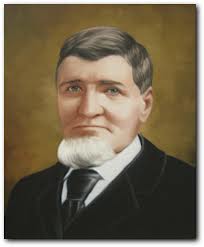
Gardner Mill Race Canal
Archibald Gardner and his brother Robert Gardner migrated from Canada to Utah as converts to the LDS church. They had built prior canals for their flour mills in Canada before building their canals and mills in the Utah valley. After their first Mill Creek, dried up the brothers moved across the Jordan River to the Bingham Creek where they constructed a dam, at approximately today’s 90th south, to raise the river to feed the 2.5 mile canal built for their new saw mill. The mill brought new businesses to the Bingham/West Jordan area, where logging, mining and farming brought new settlers. The Gardner brothers helped settle the Utah valley and would build addition mills, included Mill Creek mill.

Today the Gardner’s Mill remains as a historical landsite in West Jordan. It is a preserved piece of pioneer history and features historical buildings, some being moved to the site later, in order to make a cluster of specialty retail stores. The mill draws visitors and vendors to the property daily.

The Jordan canal in the twenty century
By 1941, as the city grew, farm land decreased and communities began to develop around the canal, making it necessary to replace the open canal to channels buried in concrete in the down town area of Salt Lake. In 1933, a campaign to clean up and restore the 51 year old canal was managed by the CWA, (CIVIL WORKS ADMINSTRATION), the canal was widened in areas and slopes were restricted. In 1971, a plan to developed a parkway along the canal was proposed, however was slow in building. By 1986, a portion of the parkway was developed from Murray city north, included in the area were newly built parks, trails and canoe site along with the Murray golf course.
However, delays occurred in 2008, due to toxic land south in the Midvale City area, where the former 446 acre smelting facility was located. The smelters operated from 1871 to 1971, processing ore from the Bingham Canyon mines. The EPA developed a plan with the state to clean up the site. In 2011, the EPA announced the area was clean, restoration of the parkway are underway; currently West Jordan City is seeking funds to make needed improvements.

The Jordan River Parkway of today is a system of40 miles of trails and parks that weave in and out of developed areas to marshy habitats along the Jordan River. It is an area used for biking, walking, running and has out crops for canoe launches.
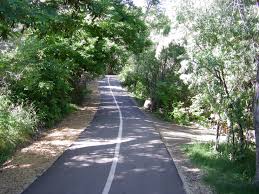
The area has become an oasis attraction for many in the Salt Lake Valley.
Reflection: The Jordan River seems to have always played a role in my life. My father told me stories of when he was a kid; a friend and he built a canoe to sail down the river during the summer. The Jordan canal has always been in the news growing up during the flooding of the 1980’s. I have lived in the area next to the site of the Gardner Village, and I have seen it develop from the Archibald saw mill to a restaurant and campus of retail buildings of today. The Midvale smelting plan was a waste land of dirt when I was born and was a controversy of whether the land was toxic or not. I have seen the Jordan River parkway develop as cities have worked to fund their portions of the trails, my favor being the Murray area. The development of this part of the Salt Lake valley has been both physical and has developed culturally for the citizens in West Jordan.
Sources:
http://www.slcdocs.com/utilities/NewsEvents/news2000/news06062000.html http://historytogo.utah.gov/utah_chapters/pioneers_and_cowboys/gardnermillandthebirthofthevalleyswestside.html
http://www.gardnervillage.com/gardner-village-history
http://www2.epa.gov/region8/midvale-slag
